 I read the in the news about the toddler Jaxon Taylor, this really caught me and hit home as my own son is of similar age. If you missed it, here’s a brief overview;
Jaxon Taylor a sixteen month old toddler in New South Wales, Australia. Fractured his upper two vertebrae C1 and C2 following a car crash causing his head to come away from his neck. Fortunately, after undergoing 6 hours of spinal surgery he is set to make a full recovery and due to go home any day. Take a look at the video on the BBC website, it’s so inspiring to see little Jaxon smiling even though he has to wear his ‘Halo’ holding his head and neck in place. Jaxon Taylor YouTube.
This highlighted to me how important it is that our children are as safe as they can be whilst we travel. I don’t know the details of the type of car collision or car seat used by Jaxon Taylor, that’s not relevant to this post. This post is not aimed to criticise what should or could have been done. This post is aimed at highlighting potential risks whilst traveling with a baby or toddler and information on minimising injury. Ultimately, all we can do is our best. Our thoughts go out to Jaxon Taylor and his family, and we wish him the speediest of recoveries.
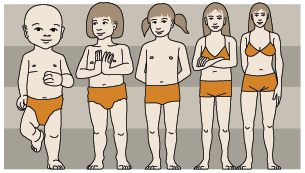 A child’s head weighs up to 25% of the total body weight, that’s like an adult having a head that weighs 20Kg (the average adult head is 4.5 to 5Kg). Their bones are softer and cartilage like, meaning they don’t have the same protection adults have protecting their vital organs.
Head on collisions tend to place the highest risk of injury on both adults and children. Generally they tend to occur at higher speeds than other types of collisions. In a head on collision the moving vehicle is brought to a stop very quickly (sudden deceleration). This sudden deceleration of the vehicle causes the person to be forced forward into their seat belt or harness on a child seat. This is due to the persons own momentum. The head, as we know, is not restrained against this forward momentum and relies on the bones ligaments and muscles to resist the forward momentum. In adults this can causes injuries including whiplash associated disorders, bruising, internal bleeding, fractures and more. As mentioned, babies and toddlers have a proportionately greater head mass and their bones are soft. Essentially the same forces applied to a more delicate structure.
Chosing the Right Car Seat
To reduce the forces placed on our little ones we use car seats, it’s a legal requirement that all children under 12 or smaller than 135cm to be seated in a car seat. This ensures that they are in a seat that fits correctly and that they are using adequate seatbelts for their age/weight category. If you are ever in a situation where you don’t have a car seat, don’t drive. Even if it is only down the road, not only is it illegal, you are putting your child at greater risk than need be. Up to 1 in 3 car accidents happen within a mile of your home. Modern car seats are great, there are some really well made products on the market with different features to ease getting your child in and out of the car, or to facilitate the growth of your child.
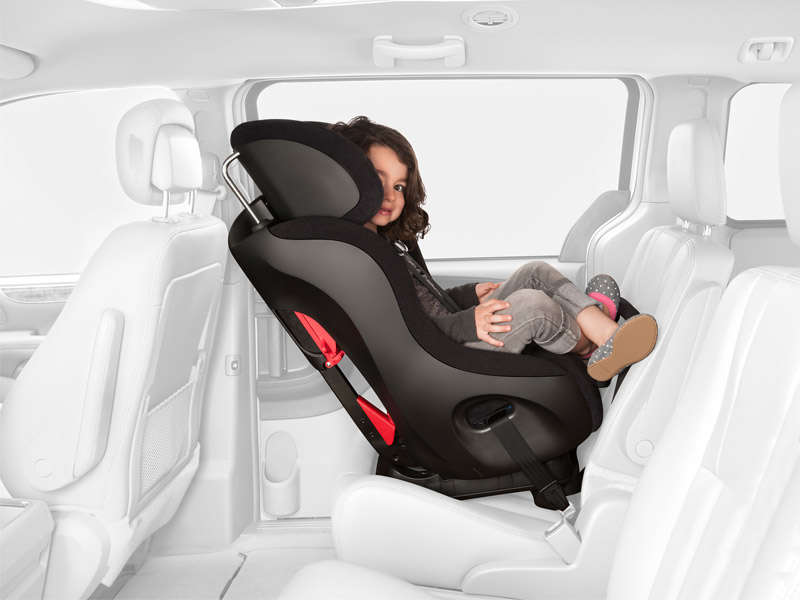 Quite new to the market, and getting more popular, are rear facing group 1 car seats allowing you to keep your child in a rear position up to the age of 4 or 5 dependant on weight. The advantage of a rear facing car seat is that in a collision your child’s momentum is absorbed through the whole back and head rest. This means that the forces placed upon our child are spread across a larger area and their head is supported stopping it from being flung forward. In Sweden rear facing group 1 seats are the only seats available on the market, as a result serious injuries have reduced. Studies have showed rear facing seats to be up to 5 times safer than forward facing seats. These seats definitely offer ultimate protection and in an ideal world everyone would use one. Unfortunately a few things hold back use. They are quite large so may not fit in all small cars, cost varies but generally rear facing group one seats start at a higher price than their front facing alternatives, you can’t easily see your child whilst traveling (although this could be a distraction anyway).
Whatever seat you chose to use here are some tips to get the best out of it and be as safe as possible:
- Harness/Belt – Five points are better than three. Five points allow more points of contact spreading the load during an accident, also there is less chance of your child coming out of a five point.
- Installation – Make sure your seat is installed correctly. Check with the manufacturer, often they have information on compatibility with particular cars. Make sure you follow the manufactures guidelines on installation. A properly installed seat is better than a poorly installed one.
- Child Fit – Make sure your child fits their seat. Use weight and height guidelines to help, age is a rough guideline and not all children are big enough for a group 1 seat at a year and some may need to step up sooner. Make sure the harness is on the right settings and is a good, but comfortable fit.
- No Twists in the Harness – not only is this going to be uncomfortable for your child. Twists narrow the surface are of the belt causing greater pressure on an area if there were an accident. Also, nice wide belts spread the pressure better than narrow belts.
- Second Hand – if using an old or used seat make sure; it is intact, all pieces are there, it hasn’t been in an accident, you have the manual and know how to fit it. It’s also important to consider the age of the seat as plastics can become brittle with age, compromising the safety of the seat.
Thank you for reading and I hope you found this post helpful. If you do experience an accident, be sure to seek medical advice for yourself and your little one, it’s always better to be safe. If you feel you or your little one would benefit from some treatment, please call. Are Osteopath Sophie Parker specialises in paediatric Osteopathy and will be more than willing to help or answer your questions.
Pure Health Osteopath Clinic 01179 000 935