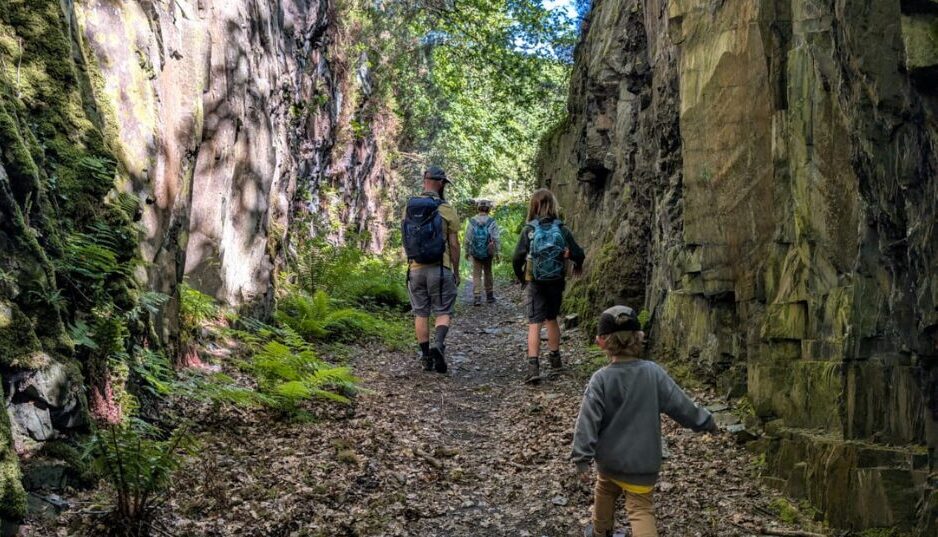
With the long June days finally here, there is no better place to be than outdoors. Whether you are planning a brisk walk along the Weston-super-Mare seafront, tackling the rugged paths up on Sand Point, or heading down into the Mendips for a proper day hike, walking is one of the best ways to enjoy the Somerset sunshine.
Over the spring, we spent a lot of time discussing how to future-proof our bodies against the demands of our daily routines. But as we transition from our regular, predictable environments—like standing at a workbench, prepping at a kitchen unit, or working at a clinic plinth—to outdoor summer hobbies, our bodies face a completely different set of mechanical demands.
Today, we are kicking off our Fair-Weather Series by breaking down the hidden, repetitive strains of summer walking and hiking—and how to ensure your structural framework is ready to absorb the miles.
The Cumulative Strain: When the Miles Catch Up
When we think of sports injuries, we often picture sudden, dramatic moments like a tripped ankle or a slip on a muddy trail. But when it comes to summer walking, the strains we see at our clinic are almost always cumulative.
When you leave flat, predictable indoor floors and spend hours walking on uneven grass, shifting sand, or rocky coastal paths, your body can’t just move on autopilot. Your joints have to constantly adapt to micro-changes in the terrain. If your body isn’t fully prepared to handle that repetitive load, two common mechanical bottlenecks tend to appear after a few miles:
1. The Foot & Heel Burn (Plantar Fasciitis & Achilles Tightness)
If your ankles are slightly stiff from a winter of lower activity, they lose their ability to bend freely. To compensate, your feet are forced to flatten and flex excessively with every single step to propel you forward. After 10,000 or 15,000 steps on hard or uneven ground, the thick band of tissue under your heel and the tendon at the back of your calf become overworked, leading to a hot, angry, and inflamed ache.
2. The Trail Backache
Carrying a summer rucksack—even a relatively light one packed with just a water bottle, sunscreen, and a lightweight jacket—subtly shifts your centre of gravity backward. If your mid-back (thoracic spine) is stiff, your body compensates by forcing your lower back to arch excessively to keep you upright. After an hour or two on the trail, this compressed position leaves you with a dull, nagging backache.
Three Simple Steps to Condition Your Body for the Trails
You don’t need to shorten your walks; you just need to ensure your framework is prepared for the mileage. Try these three practical habits to protect your joints before and after your next hike:
- The Calf & Ankle Release (Before You Go): Before you lace up your boots, spend 60 seconds standing on the edge of a step and gently letting your heels drop down. Releasing this tension ensures your ankles can move freely, preventing your feet from taking the brunt of the uneven ground.
- The “Packed Lunch” Check (On the Trail): When packing your daypack, place your heaviest items (like a water flask or flask) right against the back panel and high up between your shoulder blades. Keeping the weight close to your spine prevents the bag from acting as a lever that pulls your lower back into a painful, compressed position.
- The Post-Walk Decompress (When You Get Home): When you return from a long walk, resist the urge to immediately slump into a deep, soft armchair. Instead, lie flat on your back on the rug for 5 minutes with your knees bent and your feet flat on the floor. This neutral position allows your deep spinal muscles to completely let go of the holding patterns from carrying a pack.
How We Help at Pure Health Osteopath Clinic
If you notice that your heels burn the morning after a walk, or your lower back nips every time you tackle an incline, it is usually a sign that your current joint mobility isn’t quite meeting the physical demands of the trail. When one area—such as a hip or a side of the pelvis—is restricted, your body loses its natural ability to distribute shock evenly. This forces your ankles or your lower back to work twice as hard to adapt, eventually leading to repetitive strain.
As a local Weston-super-Mare osteopath, my approach is focused on restoring balanced mechanical function to your whole system. By gently releasing stiff joint capsules in the feet and ankles and ensuring your pelvis moves symmetrically, we take the excessive pressure off those overworked areas. Our goal is to ensure your entire framework absorbs the miles beautifully, allowing you to enjoy the Somerset countryside completely pain-free.
Your body should be a vehicle for enjoying the summer, not a limitation. Before you plan your next big walking route, let’s make sure your structural framework is firing on all cylinders.